
Living in another country can be a profoundly transformative experience. But alongside freedom, opportunity, and reinvention, many expatriates discover a less visible reality: loneliness, displacement, anxiety, and the feeling of not quite belonging anywhere.
When we think of someone living abroad, we usually imagine freedom.
An interesting job.
A new city.
The possibility of reinventing oneself.
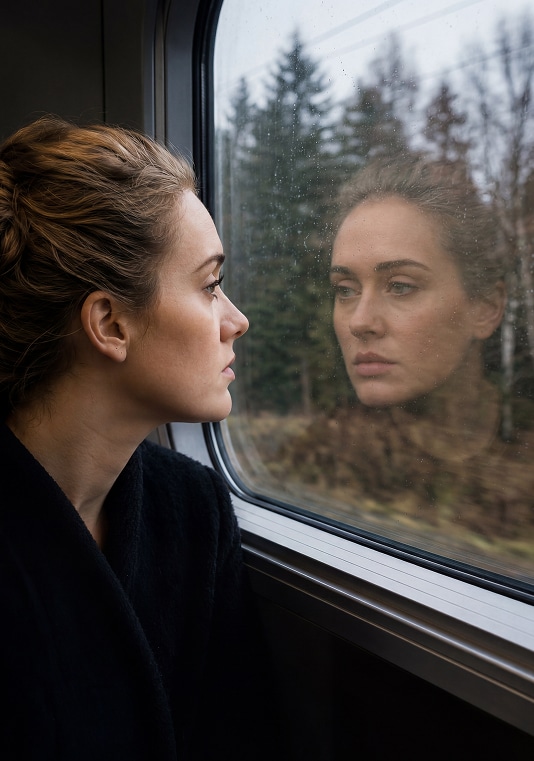
What we rarely imagine is the loneliness.
The unexpected nostalgia when hearing a song in your language in a supermarket. The feeling that your life is happening in one place while a part of your heart continues to live in another. Or that strange experience of returning home and discovering that you no longer feel completely from there either.

“I don’t know exactly what’s wrong with me. In theory, I should be fine.”
A common phrase in consultation among people who have built a life abroad, but feel that something emotionally does not quite fit.
Migratory grief exists, even if no one talks about it
There are losses that society recognizes easily: the death of a loved one, a breakup, losing a job. But there are other, much more silent losses: the loss of familiarity, of small daily rituals, of spontaneous conversations with those who have always known you, of the place where you didn’t have to explain who you were.
Psychology calls this migratory grief. And it doesn’t only appear when the experience abroad goes poorly. It also appears when everything is going well.
You can be in love with your new life and miss your previous one at the same time. You can feel gratitude and sadness. Enthusiasm and loneliness. Pride and fear.
When you no longer quite know where you are from
When we live abroad for many years, we stop belonging completely to a single place. We build a more complex, more hybrid identity and, sometimes, one that is more difficult to explain.
Some people feel guilt for being far from their families. Others feel pressure to prove that the decision to emigrate was worth it. Many discover that professional success does not always protect against loneliness.
When you start feeling like a foreigner in two countries
Perhaps one of the most difficult experiences to explain is this.
After some time in Spain, many people discover that they don’t feel exactly the same when they return home either.
The United States is still their country.
But they are no longer exactly the same person who left.
They begin to live between two worlds.
And, sometimes, they feel they don’t completely belong to either.
This phenomenon is extremely common among international expatriates.
And it often generates deep questions about identity, belonging, and purpose.
Why I work specifically with expatriates
In addition to my clinical training, I know this experience from the inside.
I have lived, studied, and worked in different countries, including the United States.
I completed my postgraduate training in New York and I know what it entails to adapt to a different culture, build a life far from home, and constantly move between cultural contexts.
That is why a large part of my work focuses on accompanying expatriates, international students, and professionals living between cultures.
Not because all their problems are related to migration.
But because the experience of living far from home touches many areas of life: relationships, self-esteem, anxiety, identity, and the sense of belonging.
Therapy in English or French for expatriates in Madrid
Language matters.
There are emotions that surface more easily in one’s native tongue.
Memories that can only be told with certain words.
Nuances that are lost when we try to translate them.
That is why I offer therapy in English, Spanish, and French.
My goal is not only to help you manage symptoms.
I also want to offer you a space where you can better understand what you are experiencing and build a stronger relationship with yourself as you navigate this stage of change.
Finding your place
Moving to another country can be one of the most enriching experiences in life.
Also one of the most transformative.
Therapy does not eliminate nostalgia.
It does not make the distance disappear.
But it can help you understand who you are now, integrate the different parts of your story, and find a more authentic way to feel at home, wherever you are.